
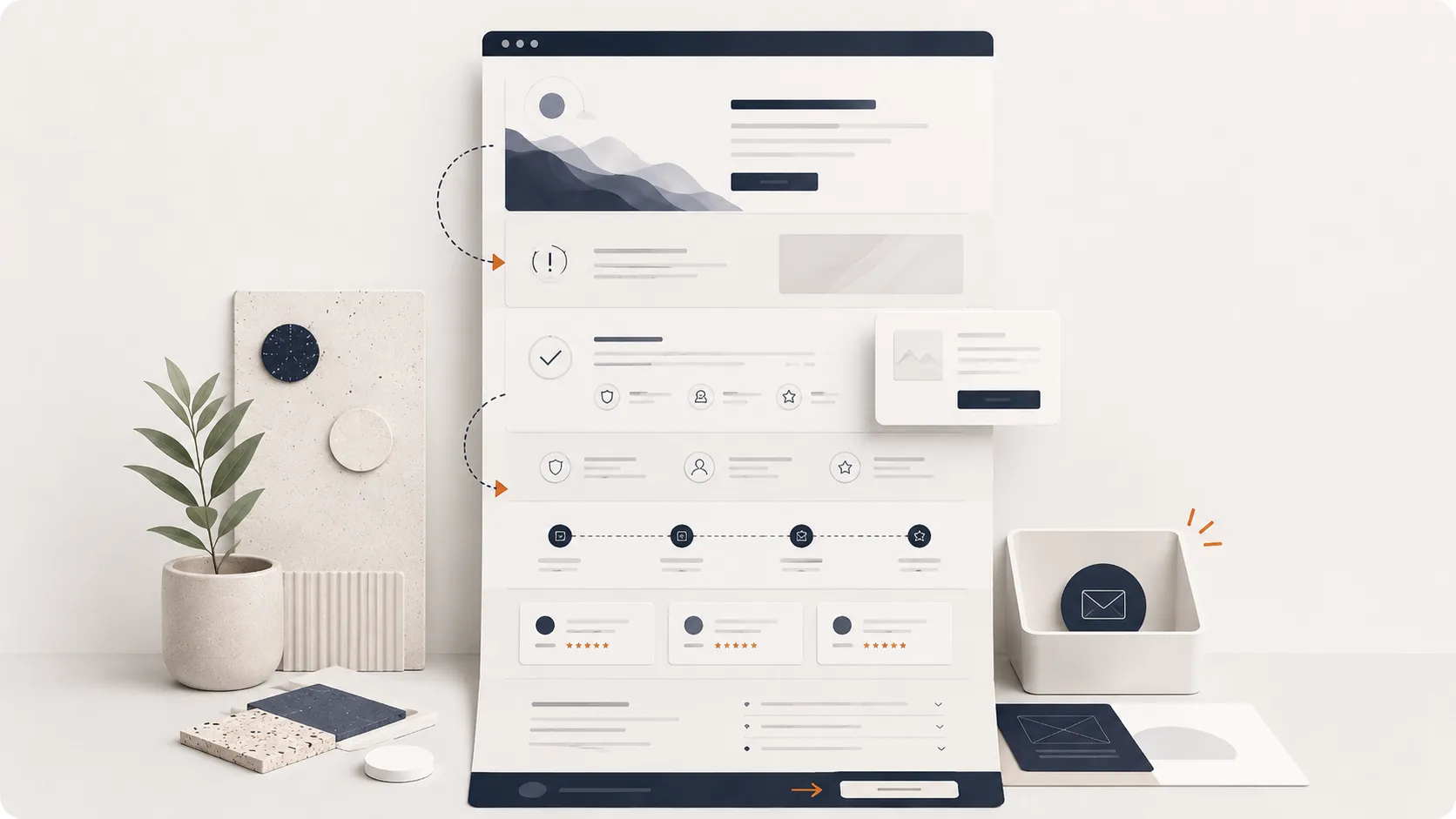
How to Write a High-Converting Service Page
The exact structure you need to explain your services and prove your expertise.

Start Your Project
Book a free discovery call to discuss your business goals and map out a website that converts visitors into customers.
Your homepage might be the front door to your business, but your service pages are the engine room of your lead generation.
When someone clicks a Google Ad or searches for a specific service (like "bathroom renovations" or "commercial electrical fitouts"), they shouldn't land on your homepage. They should land on a page 100% dedicated to that specific service. (This is a foundational concept we cover in our SEO Basics guide).
The problem with most service pages
Most service pages are just a title, a paragraph of generic text ("We offer high-quality bathroom renovations. We have 20 years of experience."), and a contact form.
This doesn't sell. It assumes the visitor already trusts you and is ready to buy. In reality, a high-converting service page needs to act like your best salesperson, anticipating objections and building trust step-by-step.
The exact structure of a high-converting service page
If you want to turn cold traffic into qualified enquiries, structure your service pages using this exact sequence:
Step 1: The Outcome-Driven Headline
Your headline shouldn't just name the service; it should promise the ultimate outcome the customer wants. Focus on the result, not the process.
- Bad (Plumber): Drain Unblocking Services.
- Good: Fast, 24/7 Drain Unblocking. We'll Fix It Today.
- Bad (Accountant): Tax Consulting.
- Good: Stop Overpaying the IRD. Expert Tax Structuring for Trades Businesses.
- Bad (Landscaper): Deck Construction.
- Good: Premium Custom Decks Built for New Zealand Summers.
Need An Expert To Build Your Custom Website?
Book a free kickoff call with Keir to discuss your project requirements in detail and get a clear path forward.
Step 2: The Empathy Block (The Problem)
Before you talk about your solution, talk about their problem. This proves you understand their pain.
If you're an electrician, write about the frustration of tradesmen who don't show up on time, leave a mess, or quote low but add hidden fees. Then, explicitly state how your service solves these exact anxieties.
Step 3: The Process
Remove the fear of the unknown. Show them exactly how easy it is to work with you. A simple 3-step timeline works best:
- Book a Consult: Fill out our quick form or call us directly.
- Get a Fixed Quote: We visit your site and provide a transparent, fixed-price quote within 48 hours.
- We Do The Work: Our team arrives on time, completes the job to standard, and cleans up before they leave.
Step 4: Contextual Social Proof
Don't use generic testimonials. If they are reading the "Bathroom Renovations" page, show them a review specifically praising your bathroom renovations, ideally alongside a photo of the finished room. This is "contextual" social proof, and it is highly persuasive.
Step 5: The Final Call to Action
End the page with a strong, low-friction Call to Action. "Get a Free Quote" or "Book a Site Visit." Make the form short - ask only for name, email, phone, and a brief description of the problem.
Note: Once they fill out this form, you want to reply instantly. This is where tools like RocketFlow can automatically text or email the lead, ensuring you don't lose the job to a faster competitor.
Don't Miss These

Why Your Website Is Not Getting Enquiries
The 5 silent killers of service business websites and how to fix them today.
What Makes a Website Trustworthy?
The 5 essential trust signals your service business needs to win high-value clients.
The Ultimate Service Business Website Checklist (NZ)
Everything your website needs to turn visitors into leads. The definitive guide.